
Unilateral training to prevent Strength Imbalances
Featured Article for St Dunstans Collage.
Unilateral training refers to training that isolates the muscles on one side of the body at a time, as opposed to distributing the workout evenly between both sides as you do with bilateral training.
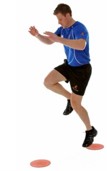


Strength imbalances are apparent in most of us but may typically be more pronounced in certain athletes. These imbalances arise due to lifestyle, formed habits, lack of activity or certain repetitive movements on one side such as the serving action in tennis or a runner whose leg that they accelerate off may be stronger.
Muscular asymmetry can be troublesome. Right to left side imbalances in the body are very often the driver that leads to unwanted compensation and resultant overuse related injuries.
Postural deviations in both active and sedentary individuals may also arise due to asymmetry, as is the case with conditions such as functional scoliosis where the muscles on one side of the spine become strong and short, whilst on the other side they tend to become weaker and longer, allowing for a pull of the bony structure in the direction of the stronger muscles.
A similar scenario is that of postural kyphosis (rounded upper back). In this case however the asymmetry is not left to right, but rather front to back. The dominant and generally tighter anterior (front) muscles pull the shoulders forward, whilst the weaker posterior (back) muscles are rendered helpless, allowing the pull forward.
Dominance of any muscle group can lead to biomechanical changes, compensation and dysfunction. When addressing bilateral symmetry one would aim to achieve less than 10% difference in strength and flexibility ratios between the two sides of the body.
Kirsty Roux Biokinetics would like to thank St Dunstans for the opportunity to have shared our Biokinetics knowledge with the St Dunstans community.